
First, we need to understand a concept: what exactly is GEO optimization? And how does AI crawl and process your content?
With AI tools like ChatGPT, Gemini, Claude, and Perplexity becoming the primary gateways for users to access information, brand visibility is no longer just a matter of “Google ranking,” but rather whether AI will mention your brand in the appropriate geographical context.
GEO (Geographic Optimization) is not traditional local SEO. Its core principle is to ensure that AI clearly understands where your business is located, which regions it serves, and why your content is highly relevant to specific areas, so that your brand or content is naturally referenced when users ask geographically relevant questions.
This article will systematically explain how GEO works from an AI perspective, common misconceptions, and specific measures you can take to increase the likelihood of AI mentioning your content in response to questions about specific cities, countries, or markets.
What exactly is Generative Engine Optimization (GEO)?
Generative Engine Optimization (GEO) is the practice of optimizing your content, data, and brand signals so that AI-powered generative systems—like ChatGPT, Gemini, Claude, Perplexity, and other AI search engines—understand, trust, and cite or reference your content when answering user questions.
In simple terms:
SEO helps your pages rank.
GEO helps your ideas get generated.
How GEO Is Different From Traditional SEO
Traditional SEO focuses on:
- Ranking webpages in search results
- Keywords, backlinks, and page authority
- Clicks and traffic from search engines
GEO focuses on:
- Being mentioned, summarized, or cited by AI systems
- Entity recognition (who you are, what you do, where you operate)
- Structured, authoritative, and reusable information
- Trust signals across the open web
With GEO, the goal isn’t just “ranking #1”—it’s becoming a default source AI models pull from when generating answers.
What Generative Engines Actually Use
Generative engines don’t “rank pages” in the traditional sense. Instead, they rely on:
- High-quality public content (blogs, documentation, FAQs, guides)
- Entity-based understanding (brands, people, products, locations)
- Structured data (clear definitions, lists, comparisons, tables)
- Consensus signals (multiple credible sources saying similar things)
- Freshness and clarity (up-to-date, well-explained content)
If your content is unclear, buried, or inconsistent, AI models are less likely to reference it—no matter how good your SEO is.
Core Pillars of GEO
1. Entity Clarity
Make it obvious:
- Who you are
- What problem you solve
- Who it’s for
- Where you operate (important for local and geographic relevance)
AI models favor clear, unambiguous entities over vague brands.
2. Answer-First Content
Generative engines prefer content that:
- Directly answers questions
- Defines concepts clearly
- Uses simple, declarative language
- Avoids fluff and heavy marketing copy
Think: “If an AI needed to explain this in one paragraph, could it?”
3. Structured, Reusable Information
Use formats AI can easily digest:
- Headings with explicit meanings
- Bullet points and numbered steps
- Comparisons and pros/cons
- Clear definitions at the top of pages
This makes your content easier to summarize and regenerate accurately.
4. Authority & Consensus Signals
AI systems trust information that appears:
- On multiple credible sites
- In consistent wording
- Across blogs, forums, documentation, and press
This is why GEO often includes:
- Strategic content distribution
- Thought leadership posts
- Community discussions
- Citations and references
5. AI Discoverability (Beyond Your Website)
Your website alone isn’t enough.
Generative engines also learn from:
- Developer docs
- GitHub
- Reddit, Stack Overflow, Quora
- Knowledge bases and glossaries
- Public case studies and comparisons
GEO ensures your core narrative appears everywhere AI looks.
Why GEO Matters Now
AI search results often:
- Answer questions without clicks
- Highlight only a few sources
- Shape user perception before they ever visit a website
If your brand isn’t part of the generated answer:
- You’re invisible
- Your competitors define the narrative
- You lose authority even if your SEO is strong
GEO is how brands stay visible in an answer-first internet.
How can we effectively implement generative search engine optimization (GEO)?
To implement GEO effectively, you need to shift from optimizing pages to optimizing knowledge—how AI systems understand, trust, and reuse your content when generating answers. Below is a practical, execution-focused framework.
1. Build clear, AI-readable definitions and core concepts
Generative engines prioritize content that explains first, persuades second. Every important topic should have:
- A clear definition in the first 1–2 paragraphs
- Plain language that removes ambiguity
- Consistent terminology across all pages
This helps AI systems quickly understand what you are and what problem you solve, increasing the likelihood your content is selected as a reference.
2. Strengthen entity signals (brand, product, author)
LLMs rely heavily on entity recognition, not just keywords. You should:
- Use a consistent brand and product naming convention
- Clearly associate content with real authors or organizations
- Repeat core entity–topic relationships across multiple pages
The goal is to make your brand an obvious answer candidate for a specific problem space.
3. Create content that is easy for AI to quote and summarize
Generative engines favor content that can be safely reused. Optimize for:
- Short explanatory paragraphs
- Bullet points and numbered frameworks
- Explicit cause–effect statements
- Clear conclusions or takeaways
If a paragraph cannot be summarized in one sentence, it’s harder for AI to reuse.
4. Cover topics deeply, not just broadly
One-page optimization is rarely enough for GEO. Instead:
- Build topic clusters around core questions
- Answer beginner, intermediate, and advanced queries
- Maintain consistent positioning across all related content
Depth signals authority, which increases trust during AI answer synthesis.
5. Align content with real generative queries
Generative search queries are often:
- Conversational
- Problem-oriented
- Multi-part
Your content should directly answer:
- “What is…”
- “How does…”
- “Why does…”
- “What’s the difference between…”
Explicitly addressing these questions increases retrieval probability.
6. Reinforce credibility and factual reliability
AI systems down-rank uncertain or promotional content. To improve trust:
- Avoid exaggerated claims
- Explain why something works, not just that it works
- Reference widely accepted concepts or standards when relevant
- Keep facts consistent across pages
Credibility is a core ranking factor in generative systems.
7. Structure content for retrieval, not just reading
Beyond readability, optimize for retrieval:
- Use descriptive headings (not clever ones)
- Keep sections tightly scoped
- Ensure each section answers a single question
Well-structured sections are easier for AI to extract and reuse.
8. Measure success differently than traditional SEO
GEO success is not only about traffic. Track:
- Brand mentions in AI tools
- Whether your definitions appear in generated answers
- Consistency of how AI describes your product or category
- Inclusion in AI Overviews and citation panels
Visibility without clicks is still GEO success.
9. Maintain consistency across platforms
Generative engines learn from many sources. Ensure:
- Your website, docs, blogs, and public profiles tell the same story
- Core descriptions and positioning don’t conflict
- Updates are reflected everywhere
Consistency increases confidence during model synthesis.
10. Think like an answer, not a landing page
The most GEO-optimized content answers a question completely, clearly, and safely.
If an AI had to answer this question right now, your content should feel like:
- The safest source
- The clearest explanation
- The least risky to reuse
That’s the core mindset behind effective GEO.
11. Different AI systems utilize search engines for online searching
LLMs with live web retrieval
Some AI systems combine large language models with real-time search engines. When a query requires up-to-date or verifiable information, they:
- Trigger a web search
- Retrieve a limited set of high-authority documents
- Synthesize an answer from those sources
For GEO, this means your content must be:
- Easily retrievable by traditional search engines
- Hosted on trusted, frequently crawled platforms
- Clearly structured so it can be summarized without distortion
AI search engines with native synthesis
Other systems function more like AI-first search engines, where synthesis is the default output. They:
- Rank sources internally
- Extract facts and explanations
- Generate a consolidated response rather than a list of links
In this model, GEO success depends on:
- Strong entity recognition
- Clear factual statements
- Consistency across multiple authoritative sources
Being ranked is less important than being selected.
ChatGPT prefers the Bing search engine, Google AI prefers the Google search engine, and Perplexity likes both Bing and Google search engines.
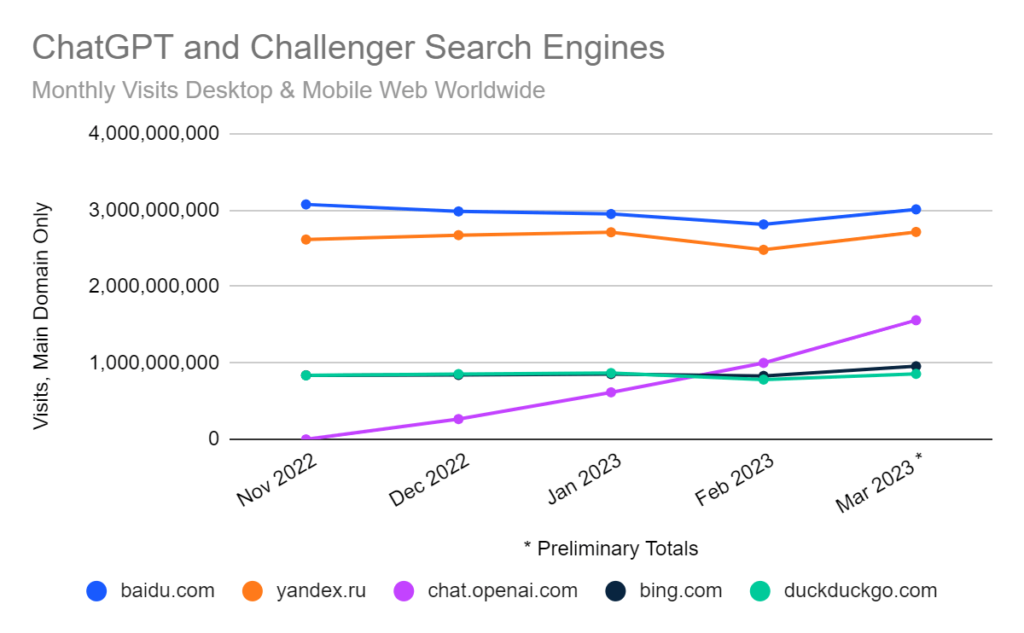
Platform Selection for Generative Search Engine Optimization (GEO) in 2025
For Type Verify, platform selection is a core GEO lever—not a distribution afterthought. In 2025, generative engines increasingly rely on high-authority, frequently crawled platforms to validate entities, reinforce topical authority, and select sources for synthesized answers. Our strategy focuses on placing consistent, factual, and AI-readable content where generative systems already trust and retrieve information.
rioritizing high-authority platforms for AI ingestion
Type Verify leverages high-weight domains that LLMs and generative search engines repeatedly crawl and reference. These platforms act as trust amplifiers, helping AI systems confirm the legitimacy, relevance, and context of our brand and product.
Key characteristics we prioritize:
- Strong domain authority and long-term credibility
- High crawl frequency by major AI systems
- Content formats that are easy to quote, summarize, and contextualize
- Existing use as training, retrieval, or citation sources
This ensures our content is not only indexed, but also usable during answer generation.
Strategic use of Reddit and large forums
Large forums—especially Reddit—play a unique role in GEO:
- Reddit is heavily referenced by generative engines for real-world explanations, comparisons, and user intent signals
- Threads often surface in AI-generated answers due to their conversational clarity
- Well-structured, value-first posts are frequently summarized or paraphrased by AI systems
Type Verify participates in Reddit and similar forums by:
- Publishing non-promotional, problem-solving explanations
- Clarifying definitions and workflows related to type verification and trust signals
- Reinforcing consistent terminology and entity associations
This positions Type Verify as a recognized solution within natural conversations, which generative engines favor.
Multi-platform content distribution as an entity reinforcement strategy
Rather than duplicating content, Type Verify adapts core ideas across:
- Authoritative blogs and publications
- Technical documentation platforms
- Q&A and discussion-based communities
- Knowledge and reference-style websites
Each placement reinforces the same core entity–topic relationship:
Type Verify = verification, trust, and accuracy in typed data and identity signals
This repetition across trusted environments strengthens AI confidence during retrieval and synthesis.
Why platform diversity matters for GEO in 2025
Generative systems cross-check information across multiple sources. A single website—even a strong one—is often insufficient. Platform diversity allows Type Verify to:
- Reduce dependency on any one domain
- Improve factual consistency across retrieval sources
- Increase the likelihood of being selected as a primary or supporting reference
In GEO, presence across trusted platforms matters more than volume.
Platform selection as a long-term GEO asset
By focusing on where AI learns and retrieves, not just where users click, Type Verify builds durable generative visibility. Each high-authority placement becomes a long-term asset that:
- Reinforces entity recognition
- Improves answer inclusion
- Shapes how AI explains and positions the brand
In 2025, effective GEO is less about chasing new platforms—and more about owning the right ones consistently.